History
Explainer
How Gutenberg's Press Changed Europe
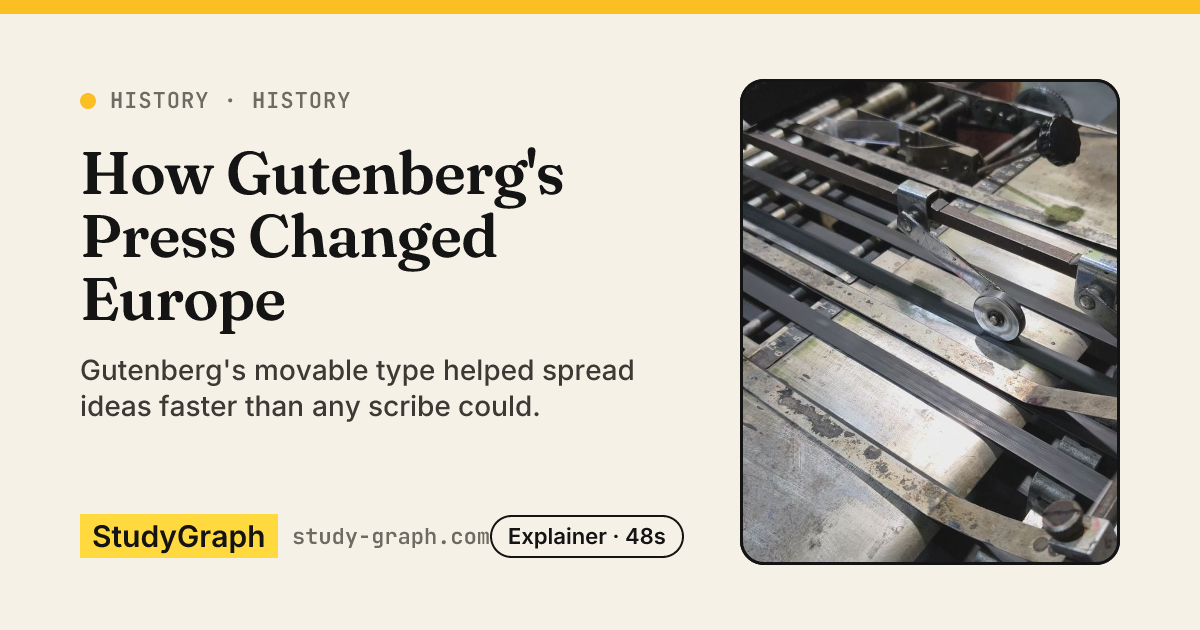
Gutenberg's movable type helped spread ideas faster than any scribe could.
Quick check · tap an answer to continue
Lesson notes
Key points
- Around 1450 in Mainz, Johannes Gutenberg combined metal movable type, oil-based ink and a screw press.
- Because pages could be reproduced cheaply and identically, book costs fell and texts became standardised across regions.
- Historian Elizabeth Eisenstein called this shift a communications revolution that underpinned later intellectual change.
Definitions
- Movable type
- Reusable individual metal letters arranged into pages, inked and pressed, then reset for new texts.
Takeaway: Print made texts cheap, fast and standardised.
Quick check: What made print copies more reliable than manuscripts?
- They were identical
- They used parchment
- Monks checked them
Movable typeStandardisationPrint revolution
Lessons like this, for your syllabus.
Short narrated study videos written for your course, level and exam. Free to start.
Get lessons for your own syllabus